
Landover City Directory Collections
Begin with a map of collections, not a promise. The Prince George's County Memorial Library System lists city directories among its Discovery Suite material, alongside census schedules and family-history databases. Nothing in that description names an exact Landover run. The Maryland State Archives directory guide does establish that county-related directory holdings exist. Yet its one named Polk volume covers Laurel in 1962, not Landover. That distinction matters. A nearby city or county listing can still point you toward a publisher and a period worth searching. It simply cannot stand in for a Landover entry.
| Collection | Years | Where Held | Access |
|---|---|---|---|
| PGCMLS HeritageQuest city-directory material | Exact Landover years not stated | PGCMLS Discovery Suite | Library card and PIN, subject to resource rules |
| Ancestry Library Edition directory material | Exact Landover years not stated | PGCMLS | In-library use |
| Suburban-directory reference used for North Brentwood history | 1912 reference | PGCMLS community-history material | Exact item and shelf location need confirmation |
| Polk's Laurel City Directory | 1962 | Maryland State Archives directory collection | Adjacent-county context, not a Landover directory |
A real gap runs through the Landover city directory record. No official searchable source publishes a complete publisher run. There is no reverse-directory shelf. Nor is there a specific local entry for Landover. Treat that missing span as real. Ask for a catalog check or a shelf check before assuming annual issues, a particular publisher, or an address index. Assumptions cost hours. The related collections still work as leads, especially when a surname, road, or nearby community is already known.
Note: A catalog record identifies a holding. The volume itself decides whether Landover and the target year are truly included.
The Landover City Directory Gap
One 1912 suburban directory deserves attention. It served as a source in PGCMLS research on nearby North Brentwood. That makes it a genuinely useful regional lead. It shows suburban directory evidence at work in Prince George's County historical projects. It is not proof of a Landover listing. No scan or catalog record shows its Landover pages. The next move is simple. Ask the PGCMLS reference desk or the Prince George's County Historical Society whether a physical volume, an index, or a microfilm copy can be inspected.
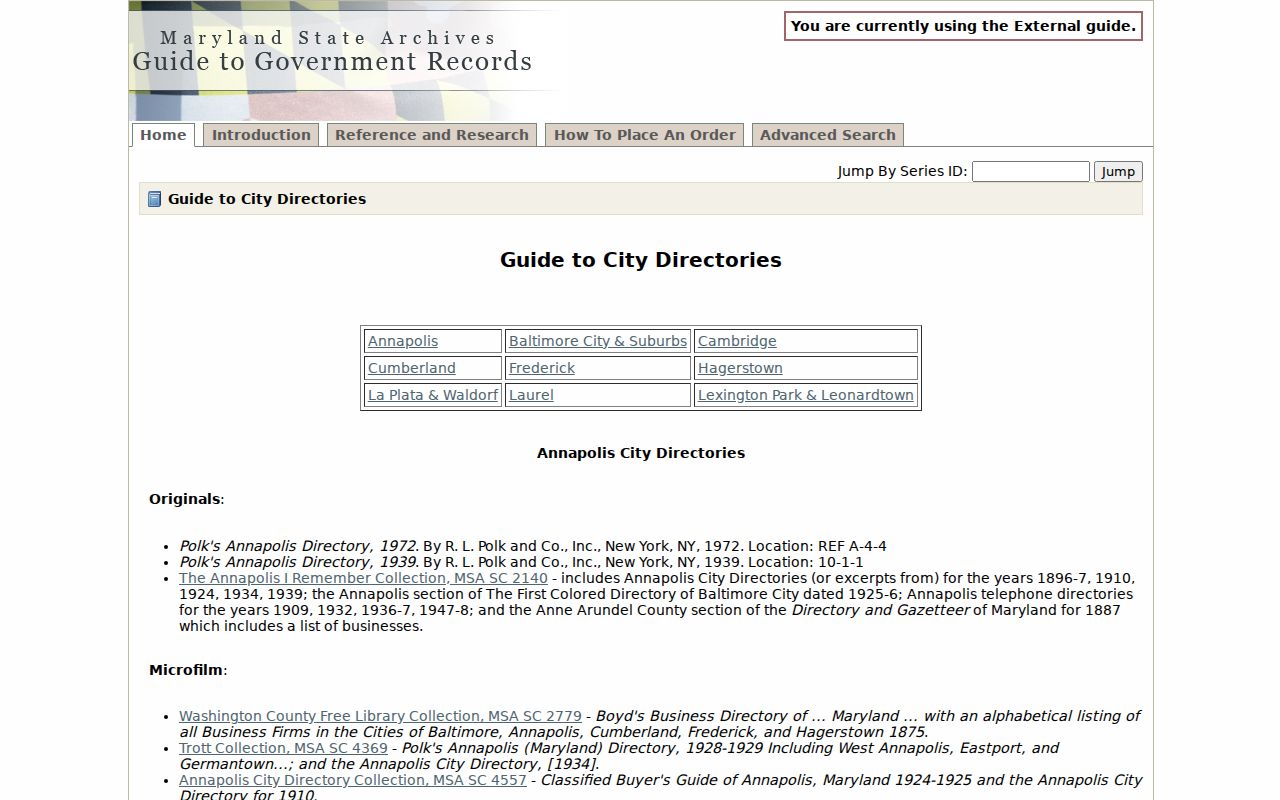
The Maryland State Archives guide deserves the same care. That named 1962 Polk volume covers Laurel alone. It confirms that an archive directory collection exists, nothing more. Laurel must never be relabeled as Landover. Preserve the title, date, and place exactly as printed in your notes. If a search shifts from Landover into a nearby postal or community name, write down why, since postal labels and municipal boundaries can differ in this part of Prince George's County.
Landover City Directories at PGCMLS
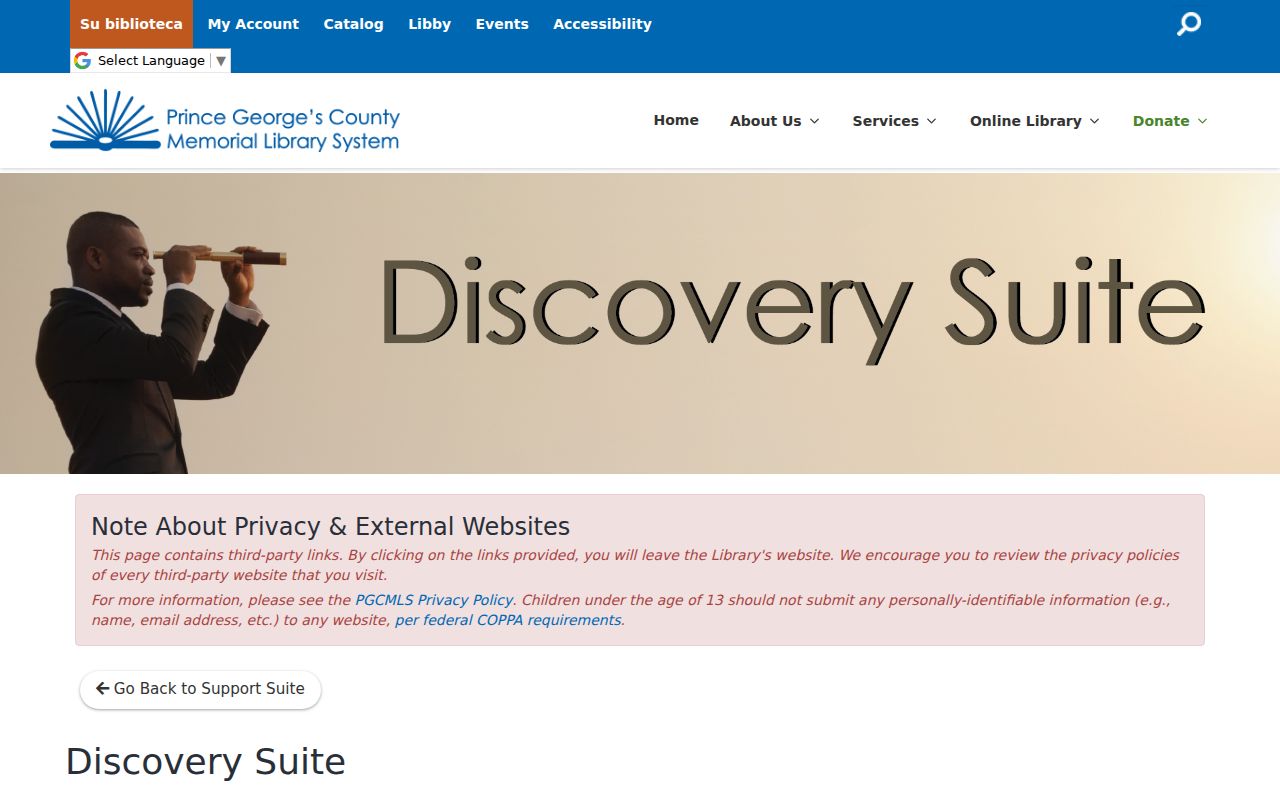
The PGCMLS Discovery Suite is the broadest local starting point for a Landover city directory inquiry. Its list covers HeritageQuest, Ancestry Library Edition, city directories, census schedules, and a Maryland State Archives connection. HeritageQuest includes family histories, genealogies, directories, and schedules. Getting in takes a library card and PIN. Ancestry Library Edition works only during an in-library visit, and access rules vary by collection. The catalog helps too. The reference desk fills gaps when a result hides its date range. The Discovery Suite page shows those family-history resources.
Treat the resource list as a route, not a verdict. It is not proof that a complete Landover city-directory sequence sits online. Search it for a surname and census context. Save the collection title, access method, and date searched. Those notes make a later library visit easy to reproduce.
County collections also hold material that works beside a directory. Census schedules capture a dated household snapshot. Newspapers add notices and community mentions. The library route earns its keep when an address is old. It also helps when an address carries an earlier community name, or returns nothing in a web search.
Landover Directory Help at DeMarr
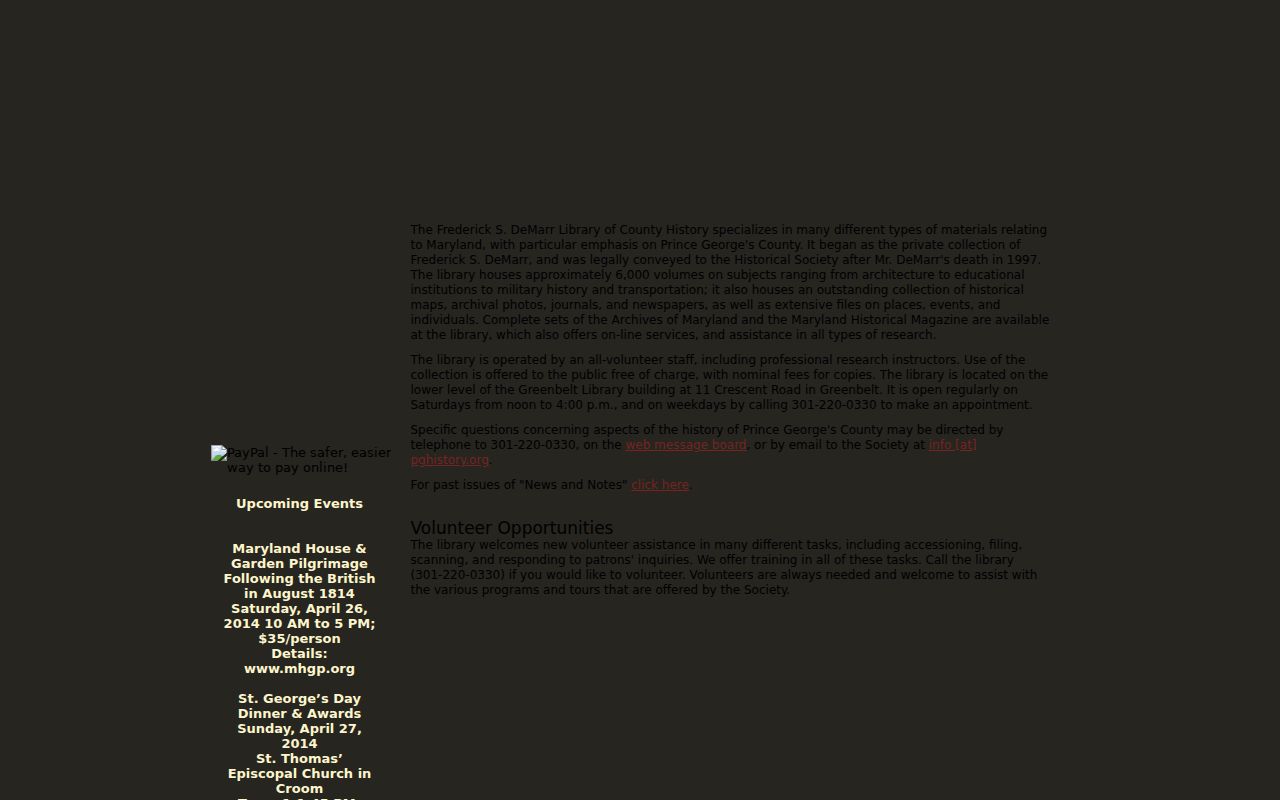
The Prince George's County Historical Society DeMarr Library offers another documented historical access channel. It sits in the lower level of the Greenbelt Library at 11 Crescent Road, Greenbelt. Public research use is free. Staff provide research assistance, and only copies carry a nominal fee. Saturday hours run noon to 4 p.m. Weekday visits are available by appointment. The phone number is 301-220-0330. It is a practical place to ask about a directory, newspaper, county-history source, or local reference file. Any of these may fill the Landover gap.
The DeMarr Library listing identifies the historical society's research setting and access arrangements.
Come prepared. Bring the person name in several spellings. Add a target date range and the address spelling from the record in hand. A staff member can then steer the search toward county histories, newspapers, microfilm, or catalog entries without mistaking a vague location label for an exact citation. Those details save time.
Note: Weekday access is by appointment, so confirm availability before traveling with a time-sensitive research question.
Reading a Landover City Directory Record
Treat any Landover city-directory entry as raw material rather than a finished answer. The line on the page is a starting checklist. Copy exactly what the volume prints. Use its own abbreviation key for anything shortened. A blank space means nothing, so resist the urge to fill it with guesswork. An address in a city directory might mark a home, or it might mark a shop. A printed name alone proves neither ownership nor a full list of residents at that address. Read the record, then verify elsewhere.
| Printed name or initials | Transcribe spelling, initials, and punctuation exactly; compare variants before merging records. |
|---|---|
| Street and number | Copy the directory form first, then compare it with later parcel or map records. |
| Household notation | Use a spouse, widow, or relationship notation only when it is visibly printed and the volume defines it. |
| Cross-reference | Record any see-also, street-section, or name-index reference that the edition actually supplies. |
| Other printed fields | Keep every label conditional until the edition and its key have been inspected. |
- Criss-cross directory
- A reverse section arranged by street and number, when an edition includes one, used to move from an address to the names printed there.
- Householder index
- A name sequence that identifies the household entry in a particular volume; its scope depends on that publisher.
- Abbreviation key
- The publisher's explanation of shortened terms and marks. Photograph or copy it before interpreting a notation.
Once an old address surfaces, property questions can move to land records. The SDAT real-property search works by address, account, or map reference, not by owner name or ZIP code. Results sometimes list a mailing address that differs from the parcel itself. Treat that detail as context. It cannot replace the wording printed in a historical directory.
Landover Archives Beside City Directories
Anyone tracing names through a Landover residents directory can use the Maryland State Archives directory guide. It helps separate a genuine directory holding from a run that only looks local. The Archives Guide to Government Records adds wider county context. It covers Prince George's County assessment records from 1861 to 1919. Voter records run from 1868 to 1900, and wills from 1698 to 1979. Microfilm runs through 1997. Plat series appear too. Each has its own documented ranges. None of these are city directories. Still, they can anchor a name to a place. They work whenever the directory year you need is missing.
The statewide catalog in the Archives directory guide shows how holdings are sorted. Local places sit apart in the listings.
Digital catalogs and scans are only one channel. Paper volumes, microfilm, and archive research requests all remain open routes. The State Archives search room stays available too, and any of these can help when an online index runs dry. Contact the repository with the county, an approximate date, and the record type. Include any known address or surname as well. A request that specific gets useful answers. It also avoids claiming a directory exists before anyone has confirmed it.
Landover City Directories and County History
Prince George's County enjoys an unusually long surviving records story. The Maryland State Archives history of county records reports no courthouse fire. It also reports near-complete preservation of the series. Court material begins with the county court of 1696. The Archives of Maryland Online transcription covers those earliest years. It offers indexed records from 1696 to 1699. Survival does not mean every volume is digitized, name-searchable, or about Landover. It does mean a missing directory entry can open another county record trail. The search does not simply end there.
That wider shelf serves family-history and heir research when handled with care. Each source answers a narrower question. A directory suggests a date or an address. A deed clarifies the parcel. A census shows the people counted together at one moment. Assessment, probate, voter, plat, newspaper, cemetery, and land materials all have separate roles. Keep those roles distinct rather than fusing them into a single unsupported story.
Note: Long record survival widens research options. It cannot promise a digitized Landover city-directory page for every year.
Trace Landover Households Through City Directories
A careful Landover city-directory trail hops from one dated source to the next, always in the exact words each one prints. Federal census access follows a 72-year schedule. The public sequence currently reaches from 1790 through 1950. Remember that a census is a household snapshot, while a directory offers a different dated view of the same people. Compare the two side by side. Never assume a directory appeared annually, and never read a missing name as proof of a move or a death.
- Find the earliest confirmed mention of the name or address in a volume, catalog record, newspaper, census entry, or county series. Preserve the original spelling and date.
- Inspect each available directory year on its own. Record a street form, cross-reference, and notation only if printed and defined by that edition.
- Use a reverse or criss-cross section only when the volume contains one. Search the street number and spelling as printed before modernizing the address.
- Pair the nearest directory evidence with the closest available census year, then check a dated newspaper notice or county archive series for a change between them.
- Use parcel and recorded-instrument sources to test the property history, then continue the address trail through Past Residents when the question is specifically about an earlier parcel trail.
A name can drop off a list for several reasons. The collection may skip that year. The place may sit outside its coverage. The publisher may have used a variant spelling, or the person simply changed address. Try nearby community names, old street spellings, and the post-office label. Add surname variants before giving up. A search driven by an address needs a different tool. The By Street route handles current parcel and street records far better than forcing a historical directory to answer a modern address question.